Aluminum, a lightweight and versatile metal, plays a crucial role in a variety of industries, particularly in the production of aluminum profiles used in construction, automotive, aerospace, and electronics. Due to its unique characteristics, aluminum has become the material of choice for numerous applications.
1. Properties of Aluminum: A Versatile Material
Aluminum (AI), an element found in the third period of the periodic table with atomic number 13, is known for its exceptional properties compared to other non-ferrous metals, steel, plastics, and wood. It boasts numerous advantages that make it suitable for a wide range of applications:
|
Basic Characteristics |
Main Features |
Examples of Main Application Areas |
|
Light weight |
Aluminum has a density of 2.7/dm³, which is about 1/3 that of copper or iron, making it a good material for lightweighting |
Used in the manufacture of aircraft, spacecraft, rail vehicles, automobiles, ships, bridges, high-rise buildings, heavy machinery components and lightweight containers, etc |
|
Good strength |
Aluminum's mechanical properties are not as good as steel, but it has high strength, can add copper, magnesium, manganese, chromium, and other alloying elements, made of aluminum alloy, and then heat-treated, and get very high strength. The strength of aluminum alloy is better than ordinary steel, and can also be comparable to the special steel |
Used in the manufacture of bridges (especially suspension bridges and movable bridges), airplanes, pressure vessles, containers, building structural materials, small hardware, etc |
|
Aesthetically pleasing, suitable for a variety of surface finishes |
Aluminum and its alloys have an oxide film on their surfaces, which is silver-white and quite beautiful. If it is oxidized, the oxide film on its surface is more solid, and it can also be colored and sprayed, etc., to create a variety of colors and glossy surface |
Architectural wall panels, appliance decorations, ornaments, signs, doors, windows, curtain walls, automobile and aircraft skins, instrument housings, and indoor and outdoor decorations materials, etc. |
|
No magnetic |
Aluminum is non-magnetic |
Compasses, antennas, wheelhouse instruments, etc., for use on ships |
|
Low temperature resistance |
Aluminum's strength increases at low temperatures without brittleness, making it an ideal material for low-temperature devices |
Cold stores, freezers, Antarctic snow vehicles, oxygen and H2 production units |
With these advantages, aluminum finds broad use in both consumer products and industrial applications.
2. Aluminum Alloys: Enhancing Aluminum's Properties
While pure aluminum is highly versatile, it is also relatively soft and ductile, which can limit its use in certain structural applications. To address this, alloying elements are added to aluminum to create aluminum alloys with improved strength, durability, and other desired properties. These alloys are vital in aluminum profile production, where strength and specific mechanical characteristics are crucial.
Some common alloying elements include:
· Copper (Cu): Increases strength and hardness but can reduce corrosion resistance.
· Magnesium (Mg): Improves strength and corrosion resistance, commonly used in marine applications.
· Silicon (Si): Enhances castability and reduces the melting point.
· Zinc (Zn): Used to increase strength but may reduce formability.
Classification of Aluminum Alloys
Aluminum alloys are generally classified based on their primary alloying elements and their processing methods. The most common classification system uses a four-digit number to denote specific alloys. The first digit represents the main alloying element, with the following groups being the most common:
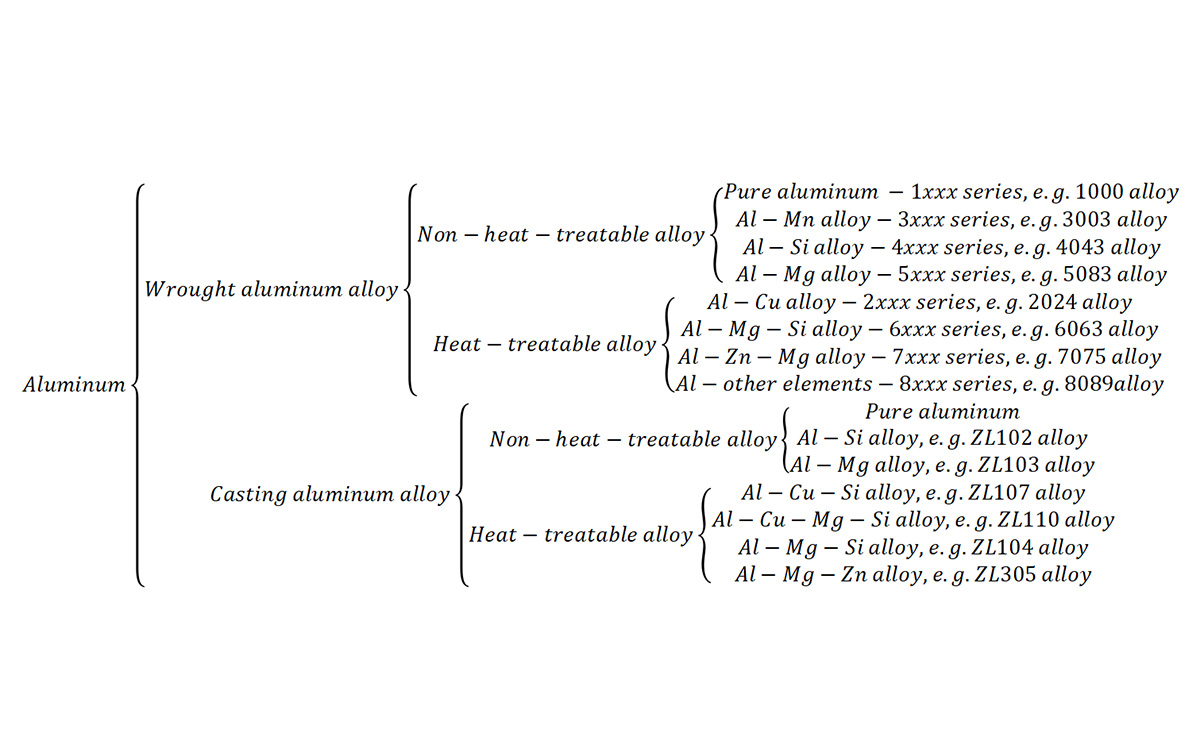
Each alloy has specific properties that make it suitable for different applications, from aircraft to everyday consumer goods.
3. Aluminum Alloys in Profile Production
Aluminum profiles are often produced using 6xxx series aluminum alloys, such as 6063, due to their combination of strength, extrudability, and corrosion resistance. This makes them ideal for building doors, windows, and other structural components.
The aluminum profile production process can be broken down into three main stages:
(1) Casting
The first step in the production process is casting, where raw aluminum and alloying elements are melted and cast into cylindrical billets. The process typically involves:
· Batching: Selecting the appropriate raw materials based on the desired alloy composition.
· Smelting: Melting the raw materials and refining the molten aluminum to remove impurities.
· Casting: Pouring the molten aluminum into molds to create billets for further processing.
(2) Extrusion
In the extrusion process, heated aluminum billets are pushed through a die to form the desired profile shape. This process allows for the creation of complex cross-sectional shapes with tight tolerances. Once extruded, the profiles undergo quenching and aging processes to enhance their mechanical properties.
For example, 6063 aluminum alloy, used in profile extrusion, undergoes a heat treatment that includes both air-cooling and artificial aging to improve its strength.
(3) Surface Treatment
After extrusion, aluminum profiles often require surface treatments to enhance their appearance, corrosion resistance, and durability. The most common surface treatment is anodization, where the profile's surface is converted into a thick, protective oxide layer. This layer can be left as-is for natural finish or colored through various techniques.
(4) Aluminum Profiles in Modern Applications
Aluminum profiles are indispensable in modern construction, transportation, and electronics due to their unique combination of strength, light weight, and aesthetic flexibility. From high-rise buildings to automotive chassis, aluminum profiles offer an ideal balance of durability and design versatility.
In architecture, for instance, aluminum profiles provide both structural support and design freedom, allowing for large windows, sleek facades, and modern finishes. In automotive and aerospace industries, aluminum profiles contribute to weight reduction without sacrificing strength, improving fuel efficiency and overall performance.
Conclusion
The use of aluminum and aluminum alloys in the production of profiles has transformed industries by providing a material that is lightweight, corrosion-resistant, and highly customizable. As industries continue to innovate, the demand for high-quality aluminum profiles will only grow, driven by the need for sustainable, durable, and versatile materials.
