Frame material: door and window materials, and the wall connected to the material. Its main characteristic is that the surface is mostly flat where it meets the wall, fixed on the wall, and cannot be moved;
Sash material: in the doors and windows, can open the material. Its characteristic is able to move;
Window mullion: the frame material composed of a rectangle divided into a number of small rectangular material. Pseudo window mullion - fixed in the sash material; True window mullion - fixed in the frame material;
Crimp: the profile used to fix the glass on the interior side. There are usually round and square crimps;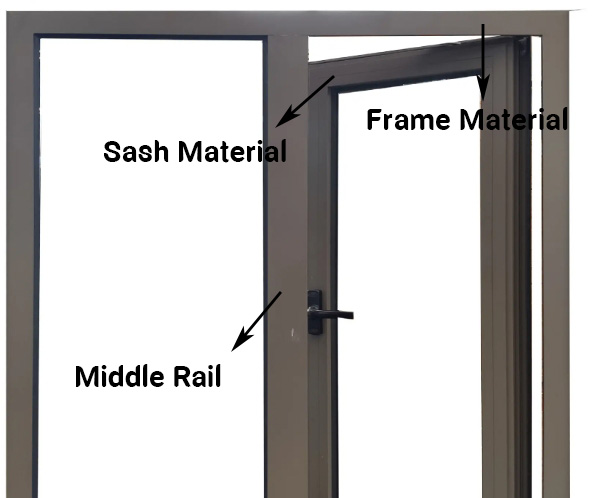
Frame material, sash material and window mullion material are all profiles.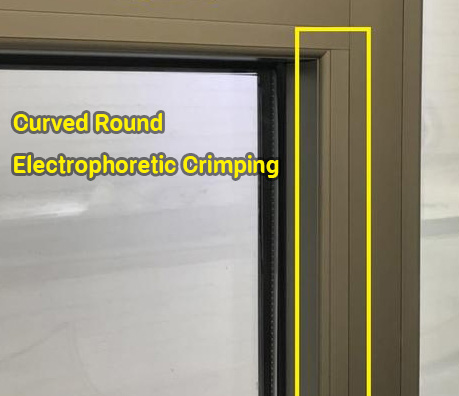
A round shape with curves is an electrophoretic crimp. This is a round crimp line (crimp bar) with a surface treatment of electrofluorophoresis technology.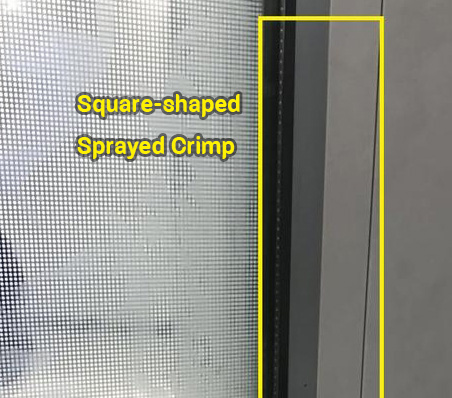
Square powder coated crimps: Press lines are on the indoor surface and are used fix the glass, after which they are glued.
Unlike the ordinary casement type assembly using 45° crash angle assembly, ordinary sliding doors and windows using 90° playing screw assembly, so the sliding doors and windows of the fan material, frame material and other names;
Sliding sash on the left and right sides of the vertical material, with a hook side called hook enterprise this side are equipped with locks; without a hook called light enterprise.
Hook section - sliding sash material, vertical material.
Flat section - next to the part of the window frame.
Upper - the profile above the sliding sash.
Lower - the profile below the sliding sash.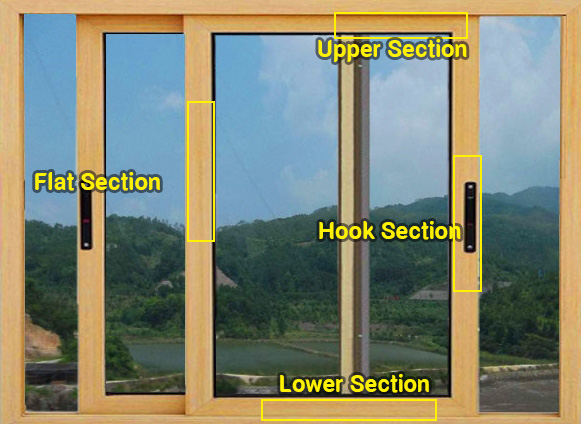
Frame material is called above the upper slide, below the lower slide, outside the two vertical material is called edge seal.
Profile acceptance standards:
Aluminum alloy building profiles (GBT5237-2004) main body is divided into six major parts, which mainly stipulates the main performance indicators of the profile as follows:
a. Door profile cross-section of the main stress parts of the smallest measured wall thickness should not be less than 2.0mm;
b. Window profile cross-section of the main stress parts of the smallest measured wall thickness should not be less than 1.4mm;
c. Electrophoresis surface treatment level is not less than grade A (coating thickness > 21μm);
d. Powder Coating's coating thickness should meet the smallest local thickness ≥ 40μm and should not be greater than 120μm requirements.
