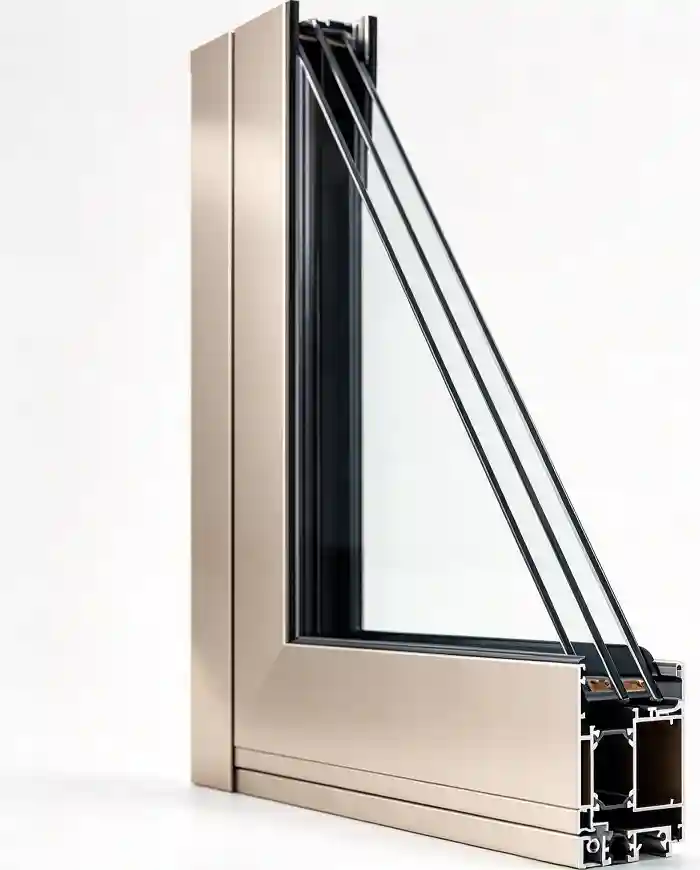
 Have you ever wondered why some anodized aluminum window profiles develop white corrosion spots after just a few years, while others remain looking like new for decades—even when exposed to similar environments and given the same maintenance?
The answer often depends on more than whether the aluminum has been anodized. It also depends on whether the anodic oxide film is thick enough, whether sealing quality is reliable, and whether the overall window system is well designed.
Anodizing does not simply apply a coating to the surface of aluminum. Instead, an electrochemical reaction forms a dense oxide film, primarily composed of aluminum oxide, directly on the aluminum surface. After sealing, this film can more effectively shield the aluminum from air, moisture, salts, and other corrosive agents.
When process quality is comparable, film thickness generally has a direct impact on corrosion resistance:
However, film thickness is not the only factor determining the corrosion resistance of extruded aluminum profiles. Sealing effectiveness, process stability, aluminum quality, and the drainage design of the window system all affect performance in service. When purchasing, film thickness should therefore be assessed alongside overall product quality.
The architectural industry typically adopts the complete anti-corrosion process of "anodizing + sealing" to form a dense, hard protective film on the aluminum surface.According to the international standard ISO 7599:2018, common grades of anodic oxide film thickness for architectural aluminum profiles range from AA5 to AA25.
Based on common industry applications, the typical uses of different film thickness grades can be summarized as follows:
| Film thickness grade | Minimum average thickness | Minimum local thickness | Typical applications | Environmental and performance characteristics |
| AA5 | 5 μm | 4 μm | Indoor furniture, decorative strips, electronic product housings |
Suitable for dry indoor environments with low corrosivity; provides basic protection against oxidation and discoloration. |
| AA10 | 10 μm | 8 μm | Indoor aluminum windows and doors, household appliances, digital accessories |
Can withstand mild corrosion from everyday contact, but is not suitable for prolonged outdoor exposure. |
| AA15 | 15 μm | 12 μm | Windows and doors on the building facade, curtain walls, standard outdoor profiles |
Suitable for typical urban climates and ordinary rain exposure, but not for prolonged exposure to high salt spray or strong acid rain. |
| AA20 | 20 μm | 16 μm | Building curtain walls, outward-opening windows in high-rise buildings, balcony windows and doors, handrails, fences, terrace railings |
Suitable for urban outdoor environments, light industrial areas, and relatively mild near-coastal conditions. |
| AA25 | 25 μm | 20 μm | Aluminum profiles for coastal buildings, ship-deck railings, high-salt-spray environments |
Offers greater resistance to light, weathering, and salt spray, making it more suitable for coastal and more corrosive outdoor environments. |
| Note: The table is intended as a general guide to product selection. For actual projects, decisions should also take into account local climate conditions, the required service life, applicable product standards, and inspection reports. |
||||
Returning to the question at the beginning: windows can show very different levels of corrosion even under similar environmental and maintenance conditions.
One likely reason is a difference in actual film thickness. To cut costs, some suppliers may use an oxide film thinner than the specified requirement. For example, a product may be priced as AA15 but actually meet only AA10, leading to premature corrosion spots when used outdoors.
When purchasing, do not rely solely on a supplier’s claim that the product has been anodized. Ask for the specific film thickness grade and verify it, checking both average and local thickness. If necessary, conduct spot checks with a film thickness gauge.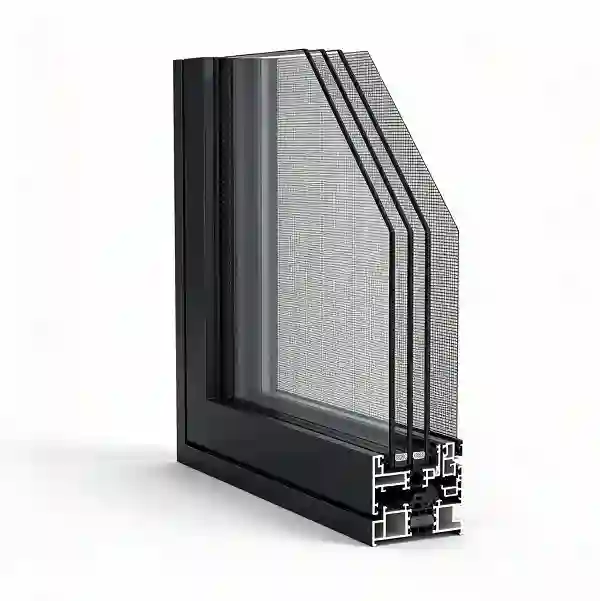
Another easily overlooked point is that even when the anodic oxide film has the same thickness—for example, AA15—standard aluminum windows, thermally broken aluminum windows, and system aluminum windows can perform differently in terms of corrosion resistance because their structural designs differ.
(The star ratings below illustrate relative differences under the same film thickness only; they are not standardized test ratings.)
The anodized protective film covers a single aluminum profile cavity. The structure is simple, but if the drainage holes are poorly designed, rainwater and dust can accumulate in the bottom frame. This keeps the profiles wet for longer and accelerates localized damage to the oxide film.
The anodized protective film covers the inner and outer aluminum profiles, which are connected by thermal break strips. PA66 nylon thermal break strips reduce heat transfer and condensation, lowering the risk of water accumulation and corrosion inside the profile cavities. Structurally, these windows generally offer better corrosion resistance than standard aluminum windows.
Note that low-quality PVC thermal break strips, rather than PA66 nylon strips, may release acidic substances as they age. Water trapped in gaps can also create an indirect risk of corrosion.
The anodized protective film covers a precision-engineered, multi-chamber aluminum profile system. System windows optimize pressure-equalized drainage and airtightness to help rainwater drain quickly and profile surfaces dry faster. This helps the anodic oxide film maintain a stable passive state over time and maximizes its service life.
Overall, assuming comparable quality of the anodic oxide coating, the corrosion resistance of different structural designs is generally ranked as follows:system aluminum windows > thermally broken aluminum windows > standard aluminum windows.
The basic rule for selecting anodizing film thickness is: the harsher the environment, the thicker the film should generally be.
An oxide film that is too thin may lead to premature loss of corrosion resistance, while one that is too thick results in unnecessary costs.The following table provides recommendations for different environments:
| Service environment | Recommended film thickness | Buying recommendations |
| Dry indoor environments | AA5–AA10 | Mainly for furniture, decorative elements, and indoor accessories. Focus on appearance, fingerprint resistance, and basic oxidation protection. |
| Typical homes in temperate inland regions | AA10–AA15 | This range may suit ordinary indoor or relatively mild conditions. For façades exposed outdoors over the long term, AA15 is the preferred option. |
| High-humidity environments or general industrial areas | AA15–AA20 | Prioritize thermally broken aluminum windows or system windows, and pay attention to sealing quality and drainage design. |
| Coastal or tropical regions | AA20–AA25 | Pair the film with a system aluminum window design to provide dual protection from the oxide layer and the overall window structure. |
Important: If windows and doors will be installed outdoors for long periods, do not assume that anodizing alone guarantees sufficient corrosion resistance.
For typical urban building façades, check that the film meets at least AA15. For coastal or high-salt-spray environments, AA20 or higher should be prioritized.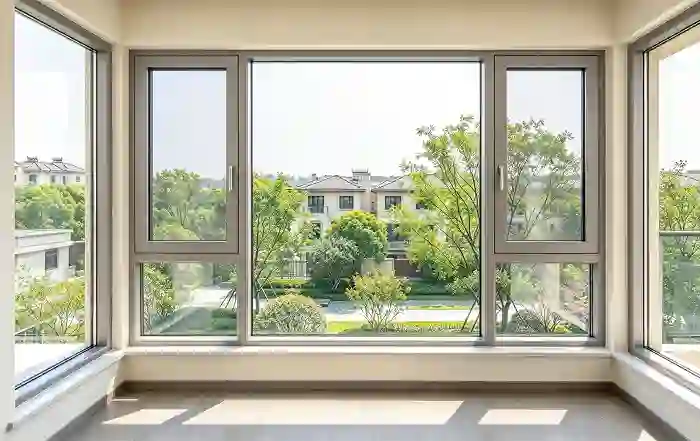
Do not just ask whether the product has been anodized; be sure to confirm the specific film thickness grade.The fact that a product has undergone anodizing treatment does not necessarily mean that its oxide film thickness meets the requirements.
When requesting a quotation or placing an order, specify whether the required grade is AA10, AA15, AA20, or AA25 rather than accepting a vague statement such as “anodized finish.”
Film thickness is generally evaluated using both average thickness and minimum local thickness. Even if a product is labeled AA15, insufficient thickness in certain areas may allow corrosion to start at those weak points. Ask the supplier to confirm both indicators instead of relying on a single marketing figure.
A thicker film generally provides better protection, but not every application requires the highest grade. Match the thickness to the actual conditions—indoors, inland, high humidity, or coastal—and balance performance, service life, and cost.
The porous layer formed during anodizing must be sealed to effectively block pathways through which corrosive agents can penetrate. Even if the film meets the thickness requirement, inadequate sealing can significantly reduce corrosion resistance. Ask the supplier for film thickness and sealing-quality inspection records.
For window and door products, check not only film thickness but also drainage holes, profile cavities, thermal break material, sealing design, and installation quality. Overall window-system design is particularly important for high-rise buildings, balcony windows and doors, and coastal projects.
If a supplier cannot specify the film thickness grade, testing basis, or intended service environment, and only claims that the product is “anodized,” “rust-proof forever,” or “suitable for outdoor use,” evaluate the offer carefully. An unusually low price may also indicate insufficient film thickness or inadequate sealing.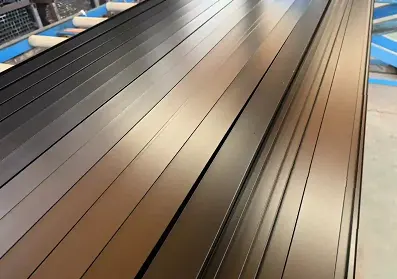
Q1: Is a thicker anodizing film always better?
Not necessarily. A thicker film generally improves corrosion and wear resistance, but it also increases cost. The key is to match thickness to the service environment: AA5 or AA10 may be sufficient indoors, AA15 is suitable for typical outdoor conditions, and AA20 or higher is recommended for coastal and other harsh environments.
Q2: Is film thickness the only factor that matters?
No. Sealing quality, thermal break material (PA66 nylon versus low-quality PVC), and drainage design can all significantly affect actual corrosion resistance. Film thickness is the “first line of defense,” while structural design and manufacturing processes provide the “second line of defense.”
Q3: How can I verify a supplier’s claimed film thickness?
Ask the supplier for an inspection report. Upon delivery, use a film thickness gauge to take spot measurements at multiple points on the profiles. Check whether the minimum average thickness and minimum local thickness meet the stated grade—for example, AA15 requires an average thickness of at least 15 μm and a local thickness of at least 12 μm.
Q4: Does the same film thickness guarantee the same service life?
No. Different window types have different drainage performance and risks of water accumulation, so their actual service lives can vary. Regular inspections, keeping drainage holes clear, and preventing corrosive substances from remaining on the surface for long periods can help extend service life.
The thickness of the anodic oxide film is the “first line of defense” against corrosion in aluminum profiles, while a well-engineered window system provides the “second line of defense.” Together, they help aluminum windows and doors maintain their appearance over decades of service. Paying closer attention to film thickness and overall quality when purchasing can mean fewer corrosion problems and less maintenance later.
If you are sourcing aluminum profiles for door and window systems—whether standard profiles, thermal break solutions, custom die design, or OEM/ODM production—Fortune Aluminum can help you match the most suitable alloy and surface treatment to your target market requirements.