In the global window and door market, a fundamental trade-off has long existed: sliding windows offer excellent space-saving advantages but often compromise on sealing performance, while casement windows provide outstanding airtightness but require additional opening space.
The side pressure sliding window completely solves this dilemma. It combines the space-saving convenience of sliding windows with the superior airtight performance of casement windows, making it an innovative and ideal solution for various architectural applications.
A side pressure sliding window (also known as an airtight sliding window, lift-and-slide airtight window) is a hybrid window system that combines the sliding operation mechanism with casement-level sealing performance.
 Its operating mechanism usually works as follows:
When the handle is rotated, the window sash first disengages from the frame through a lifting or shifting movement, allowing it to slide smoothly along the track. Even large-sized and heavy glass panels can be operated easily with this mechanism.
When the handle returns to the locked position, the sash is pulled back tightly against the window frame. This “side pressure” action compresses the entire sealing gasket around the sash, usually achieving a compression range of approximately 5–8 mm.
As a result, the system delivers the combined advantages of:
This combination provides performance advantages that traditional sliding windows cannot achieve.
The outstanding overall performance of a side pressure sliding window does not come from a single structural improvement. Instead, it is achieved through the precise coordination and complementary advantages of:
Each core component is designed according to different climatic conditions and application requirements, allowing the window system to withstand strong winds, extreme cold, heavy rainfall, intense UV radiation, and other challenging environments.
Aluminum profiles form the skeleton of any door and window system, and the foundation of any high-performance side pressure sliding window lies in its extruded aluminum profiles. The 6000 series (particularly grades 6063 and 6061) is the industry standard for architectural window and door extrusions.
The impact of aluminum profiles on the sealing performance of side-pressure sliding windows is mainly reflected in three aspects: material quality, wall thickness, and structural design.
Priority should be given to 6063-T5 primary aluminum profiles, which achieve an ideal balance between extrusion formability, strength, surface quality, and corrosion resistance, capable of withstanding decades of use without deformation or distortion.
In contrast, recycled or reclaimed aluminum with high impurity content tends to be softer, with poor wind load resistance and deformation resistance. It can easily deform within two to three years, creating gaps between the frame and glass, resulting in air leakage and water seepage.
Insufficient wall thickness reduces bending and shear strength. In strong winds, sash swaying and profile deformation can increase sealing gaps.
For side pressure windows, the wall thickness of the window frame and sash profiles is typically 1.4 mm to 2.0 mm. This thickness provides the necessary structural rigidity, especially for high-rise balcony glazing applications(wall thickness must be ≥1.8 mm), ensuring that the window can withstand repeated lateral compression and strong wind loads without deformation.
Attention should also be paid to wall thickness tolerance. Excessive negative deviation may increase assembly gaps, create uneven gasket compression, and reduce overall sealing performance.
Aluminum profiles featuring multi-chamber structures and reinforcement ribs can significantly improve window rigidity and load-bearing capacity.
Without these structural designs, long-term use may result in sash sagging, profile distortion, track misalignment, and poor closing performance.
Cutting: Frames, sashes, and mullions are cut at 45° or 90° angles according to design specifications. Cuts must be smooth and free of burrs; otherwise, gaps may form at the joints, compromising subsequent sealing performance.
Drilling and Milling: The hardware systems (handles, transmission mechanisms, and locking keepers) of side-compression windows require high precision regarding hole placement. CNC machining centers should be used when preparing these holes to ensure consistency.
Frame Assembly: The cut profiles are joined using corner connectors or screws to form the frame; diagonal measurements are checked to ensure the frame is perfectly square.
Although aluminum profiles are only one part of the sealing system, if the profile material, wall thickness, structural design or profile machining precision fails to meet required standards, the final sealing performance cannot be guaranteed.
Therefore, selecting a reliable aluminum profile supplier is essential for producing high-performance window systems.
Fortune, as a professional aluminum extrusion profile manufacturer, specializes in producing aluminum profiles for doors and windows. We provide comprehensive services covering R&D, profile design, production, sales, and technical support, offering customized aluminum profile solutions for window manufacturers worldwide.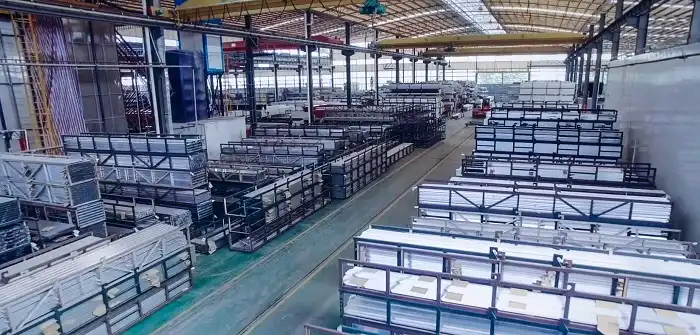
Hardware components are the key elements that enable the “side pressure” sealing function.
The multi-point locking hardware system specially designed for side pressure sliding windows engages multiple locking points along the edge of the sash when the handle is turned. This ensures that pressure is evenly distributed around the entire perimeter of the sash during the locking and compression process.
Unlike traditional sliding windows that rely on a single locking mechanism as a weak point, side pressure systems use multiple locking points distributed along the frame.Depending on the system design, there may be five, seven, or even eight locking points around the window perimeter.
The advantages are obvious:
The multi-point locking design makes it extremely difficult to forcibly pry open the window, which is a major advantage for ground-floor residences, balconies, and vacation homes.
Each locking point pushes the sash evenly against the sealing gasket, eliminating the common corner air leakage and water leakage problems found in traditional single-lock sliding windows.
Supports setting a micro-ventilation function.The sash can be locked in a slightly opened position of several millimeters, allowing continuous and secure airflow——ideal for bedrooms and hotel guest rooms.
With a “lift-and-press” linkage mechanism, even heavy triple-glazed window sashes weighing up to 200 kg can slide smoothly with only a few kilograms of operating force.
For high-rise buildings and coastal projects, hardware systems should meet relevant cycle and load testing standards, such as more than 20,000 opening and closing cycles.
The hardware should also feature corrosion-resistant surface treatment and stainless steel fasteners.
In premium-quality window systems, low-cost general-purpose hardware is often the weakest component and the most likely source of failure.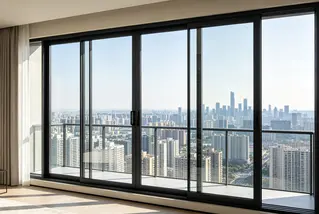
The superior sealing performance of the side-pressure sliding window relies on the perfect combination between the EPDM sealing gaskets and the PA66GF25 thermal insulation strips.
EPDM (Ethylene Propylene Diene Monomer) gasket is the primary weather-resistant sealing layer in side pressure sliding windows.EPDM provides outstanding resistance against:
It can maintain stable performance under temperature fluctuations ranging approximately from -40°C to +120°C, making it ideal for achieving durable seals.
The sealing system of side pressure sliding windows adopts a multi-layer sealing structure, usually incorporating three or more EPDM sealing gaskets.
This design creates multiple independent vapor-barrier and drainage chambers, making it ideally suited for exterior door and window applications that require sustained high performance and reliability.
At the same time, the PA66GF25 thermal insulation strip performs two vital functions:
The 25% glass fiber reinforcement imparts high strength and deformation resistance to this polyamide (nylon) thermal break strip, ensuring the structural integrity of the window frame; by preventing profile loosening or warping, it avoids compromising overall sealing performance.
Naturally, the thermal conductivity of the PA66GF25 thermal insulation strip is far lower than that of aluminum alloy, so its primary function remains thermal insulation. It effectively reduces the thermal bridge effect, helping to maintain a comfortable indoor temperature.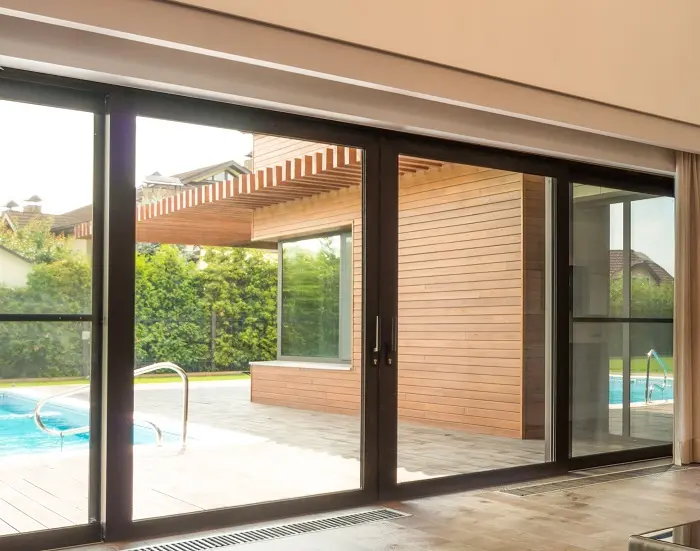
Glass typically makes up 70%–80% of the total window area, meaning that glass configuration plays a crucial role in determining indoor comfort, energy efficiency, and safety.
Side pressure sliding windows are compatible with various types of insulated glass units (IGUs). The appropriate glass configuration should be selected according to local climate conditions and geographical environments.
For high-rise balcony glazing, laminated safety glass is recommended for fixed panels or outward-facing glass panels.
For example, a configuration such as 6mm + 1.52PVB + 6mm laminated glass can effectively withstand wind loads while ensuring that broken glass remains attached after impact.
This safety feature is particularly important for buildings above 10 floors.
In regions with intense sunlight and high UV exposure, double-glazed Low-E insulated glass with solar control coating is an ideal choice.
This type of glass can block more than 90% of ultraviolet radiation, reduce solar heat gain, lower cooling energy consumption, and prevent interior furniture and decorative materials from fading.
For coastal regions frequently affected by typhoons, tempered laminated insulated glass is the preferred solution.
It provides excellent impact resistance, effectively withstands strong wind pressure, and reduces the risk of glass breakage and falling debris during extreme weather conditions.
For cold climates and passive house applications, triple-glazed insulated glass filled with argon gas and equipped with warm edge spacers is recommended.
This configuration can control the U-value (thermal transmittance coefficient) between 0.8–1.5 W/(m²·K), transforming the window into an effective thermal insulation barrier.
For buildings located near airports, highways, or other noisy environments, asymmetrical laminated acoustic glass can significantly reduce external noise transmission and improve indoor comfort.
Because the sash and frame of a side pressure sliding window are compressed evenly during closing, the insulated glass unit remains in a stable condition with balanced stress distribution.
Compared with traditional sliding windows, where vibration and deformation may gradually cause sealing failure, this structure greatly reduces the risk of long-term sealing problems and helps maintain stable performance over time.
During the design stage, it is recommended to confirm the required glass rebate depth and ensure compatibility between the sealing gasket and glass configuration. This helps avoid expensive modifications caused by later glass replacement.
Even the highest-quality components cannot achieve their expected performance if installation is not carried out correctly.During installation, the window frame must be kept absolutely level and square.
If the frame becomes twisted or misaligned, the sash cannot compress the sealing gasket evenly, and no sealing material can fully compensate for this structural problem.
Installation should use compatible low-expansion foam and perimeter sealants. After the building settlement becomes stable, the hardware system should be adjusted and fine-tuned.
Daily maintenance requirements are minimal:
1. Do side-compression sliding windows offer good value for money?
Certainly; compared to high-end casement windows with similar performance, their price is often comparable or even lower. When factoring in energy efficiency, low maintenance requirements, and a longer service life, side-compression systems offer a clear economic advantage in terms of total cost of ownership.
2. What are the primary cost components of side-compression sliding windows?
Key material costs include thermal-break profiles, multi-point locking hardware, and multi-layer sealing systems; depending on window dimensions and glass specifications, the price is typically 30% to 60% higher.
3. Are side-pressure sliding windows suitable for high-rise buildings?
Yes.This is one of their ideal applications. The compression sealing mechanism and multi-point locking system give side-pressure windows the structural integrity required for high-rise applications, enabling them to withstand the substantial wind loads encountered at height. The key lies in correct specification: profiles meeting wind-load requirements, laminated glass, and certified hardware.
4. Which aluminum alloy series is best suited for side-pressure sliding windows?
Choose thermally insulated profiles made of 6000 series architectural aluminum alloys. The profile wall thickness should be determined according to local wind-load calculations (for high-rise buildings, the sash wall thickness of exterior windows is typically required to be ≥1.8 mm, and the mullion wall thickness ≥2.0 mm), and should be paired with laminated insulating glass.
5. Which application scenarios are best suited to side-pressure sliding windows?
These windows are particularly suitable for enclosed balconies, high-rise apartments, coastal residences, and places with limited indoor space. In the commercial sector, they are also an excellent facade solution for hotels, office buildings, and mixed-use developments.
Through the organic combination of premium 6000-series aluminum profiles, custom glass, professional multi-point locking hardware, and high-performance sealing materials, side pressure sliding windows achieve a perfect unification of space saving, security, energy efficiency, sealing, and durability. As an upgraded window and door solution, they are adaptable to a wide range of diverse climatic conditions and building standards.
Fortune Aluminium is a reliable aluminum profile supplier.
Click here to view our window and door profiles.
