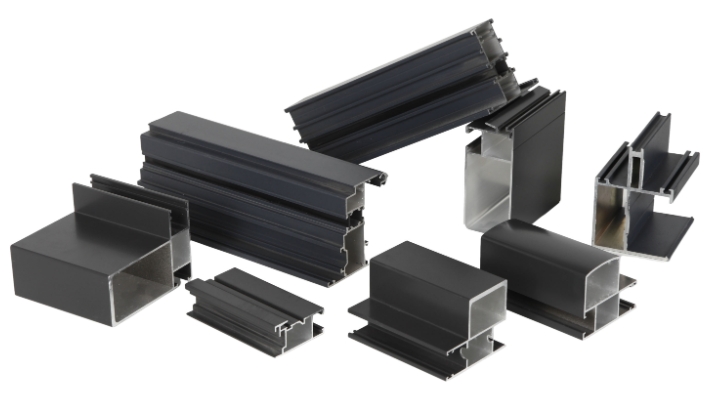
Aluminum profiles are versatile and are employed in a multitude of industries due to their lightweight nature, durability, and corrosion resistance. Nevertheless, it is important to note that not all aluminum profiles are of an indenticle quality. There are notable distinctions between industrial aluminum profiles and those utilized for windows and doors. This article examines the distinctions between these two categories of aluminum profiles, elucidating their distinctive characteristics, applications, and potential commonalities in usage.
An understanding of aluminum profiles necessitates an appreciation of the versatility of extruded aluminum sections, which can be designed into a multitude of shapes and sizes. The extrusion process allows for the creation of complex cross-sectional designs, rendering aluminum profiles highly adaptable to diverse requirements. Two primary categories of aluminum profiles are industrial aluminum profiles and window and door aluminum profiles. Each categories is designed to meet specific requirements and performance standards.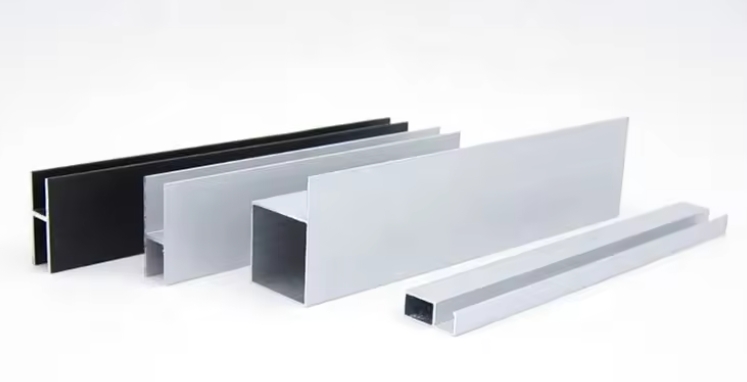
Differences Between Industrial and Window/Door Aluminum Profiles
1. Design and Structure
Industrial Aluminum Profiles:
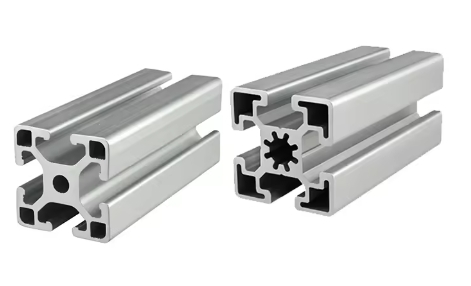
Industrial aluminum profiles are designed to provide maximum flexibility and strength for a variety of engineering and structural applications. Such profiles frequently exhibit modular designs that facilitate straightforward assembly and customization. These profiles can be utilized to construct frameworks, machinery, workstations, and even conveyor systems. The designs are typically more robust in order to withstand higher loads and stresses. The focus is on function performance rather than aesthetic considerations.
Window and Door Aluminum Profiles:
The engineering of aluminum profiles for windows and doors is specifically designed to acheive a balance between strength and aesthetic appeal. The profiles are designed to be lightweight yet strong enough to support the glass panes and withstand environmental elements. The profiles frequently exhibit sleek and smooth finishes, which serve to enhance the visual appeal of windows and doors. Additionally, the profiles include features that accomodate thermal breaks, which enhance the insulation and energy efficiency of the windows and doors.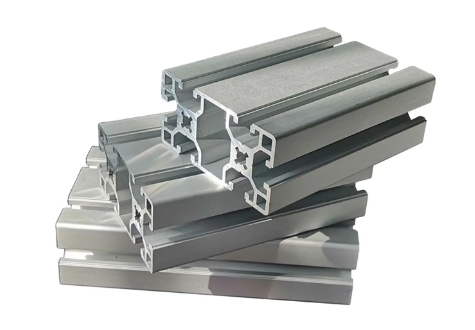
2. Material Composition and Treatment
Industrial Aluminum Profiles:
The composition of industrial aluminum profiles is frequently modified with the objective of enhancing their mechanical properties, such as tensile strength and hardness. Such profiles may be subjected to treatments such as anodizing, powder coating, or hard coating in order to enhance their resistance to wear and corrosion. The objective is to guarantee durability and longevity in harsh industrial environments.
Window and Door Aluminum Profiles:
In the case of window and doors profiles, the material composition is designed to prioritize corrosion resistance and surface finish. Treatments such as anodizing and powder coating are commonly employed to provide a smooth, aesthetically pleasing surface that also protects against the elements. Thermal treatments may be applied with the intention of improving energy efficiency, with the objective of reducing thermal conductivity.
3. Application and Usage
Industrial Aluminum Profiles:
These profiles are utilized in a multitude of industrial applications. These profiles are utilized in a multitude of industrial settings, including manufacturing plants, automotive industries, aerospace, robotics, and construction. Their modular nature allows for the creation of versatile structures, from simple frames to complex machinery.
Window and Door Aluminum Profiles:
These profiles are predominantly utilized in the construction and building industry. They serve as the foundation for windows and doors in residential, commercial, and industrial buildings. The primary objective is to provide structural integrity while simultaneously enhancing the aesthetic value and energy efficiency of buildings.
Commonalities in Applications:
Although industrial and window/door aluminum profiles serve distinct primary purposes, there are some areas of overlap in their applications:
Construction Industry:
Both types of profiles are employed in the construction industry, although for distinct purposes. Industrial profiles are employed in the construction of structrual frameworks and the erection of supporting infrastructure within buildings. In contrast, window and door profiles are indispensable for the building envelope.
Customization and Versatility:
Both profile types offer a high degree of customization. They can be tailored to specific project needs, whether it's creating a unique industrial facility or designing custom window and door solutions.
Sustainability:
Aluminum is a sustainable material that can be recycled without losing its properties. Both industrial and window/door aluminum profiles contribute to environmentally friendly practices by promoting the use of recyclable materials.
In conclusion, while industrial aluminum profiles and window and door aluminum profiles share certain commonalities, they are distinct in terms of theri design, material composition, treatment, and applications. Industrial profiles are constructed for durability and versatility in various engineering and structural applications, whereas window and door profiles are designed to provide aesthetic appeal, structural integrity, and energy efficiency in building applications. It is of the utmost suitable type of aluminum profile for the specific requirements of the project, thus ensuring optimal performance and longevity.
