The global energy transition is accelerating, and carbon neutrality has become a shared development goal for countries around the world. Among all renewable energy sources, solar PV power generation stands out due to its cleanliness, renewability, and wide resource distribution, becoming a core driver of new global power generation capacity, continuously reshaping the global energy structure and reducing dependence on fossil fuels,ensuring global energy security. As PV installations rapidly expand from large-scale ground power stations to distributed rooftop PV systems, the structural stability and outdoor durability of photovoltaic modules directly determine the system's efficiency and lifespan.In the PV module ecosystem, the frame and mounting structure are essential for supporting, protecting, and securing solar panels. Among all materials, aluminum profiles stand out due to their lightweight nature, high strength, corrosion resistance, easy processing, and recyclability. These advantages make aluminum the material of choice for PV module frames and mounting systems.
This article provides an in-depth analysis of the specific applications and key advantages of aluminium profiles in the photovoltaic field.
Aluminum profiles are widely used across multiple key segments of solar energy systems, especially in PV modules and mounting structures.Its main advantages lie in its light weight, high strength, corrosion resistance, and ease of recycling, thereby effectively reducing the overall cost of photovoltaic systems and extending their service life.
 Application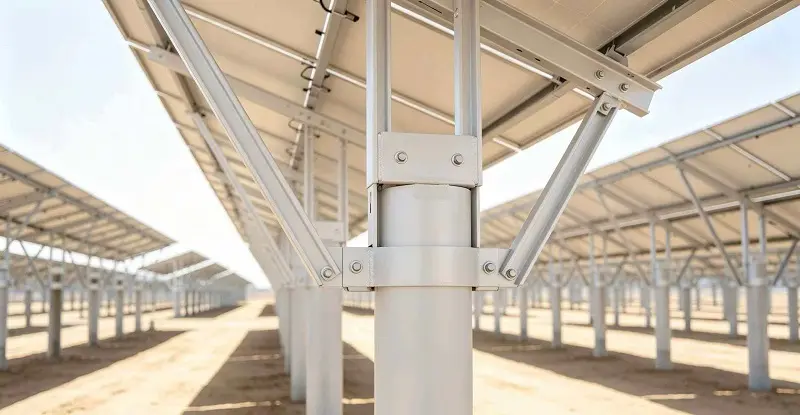
Adjusting the Angle of the PV Panels
Adjusts panel tilt to maximize solar irradiation absorption. Special extrusion components used in solar trackers work in conjunction with the drive unit to track the sun all day, thereby achieving higher power generation efficiency.
Isolation & Anti-Corrosion
Elevate the components above the roof or ground to prevent long-term immersion in water, silt, and water vapor from weeds, protect the frame from corrosion, and extend the life of the components.
Grounding & Lightning Protection
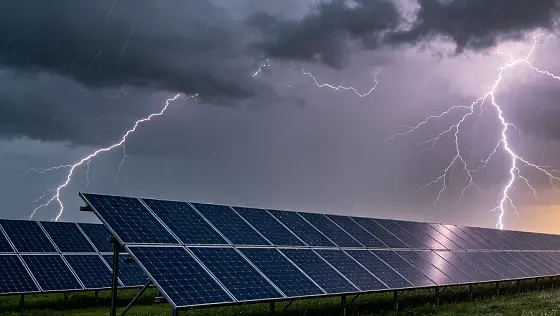
Aluminum has excellent electrical conductivity.The interconnecting brackets, grounding pads, and bolts together form a complete grounding network that safely dissipates leakage current and electrical energy caused by lightning strikes.This reduces static electricity buildup, eliminates the risk of high-voltage electric shock, and meets standard electrical safety requirements.
Besides frame and bracket mounting systems, aluminum profiles are also used in:
These applications highlight the ubiquitous presence of aluminum in solar infrastructure, reflecting the broad supporting value of aluminum profiles throughout photovoltaic systems.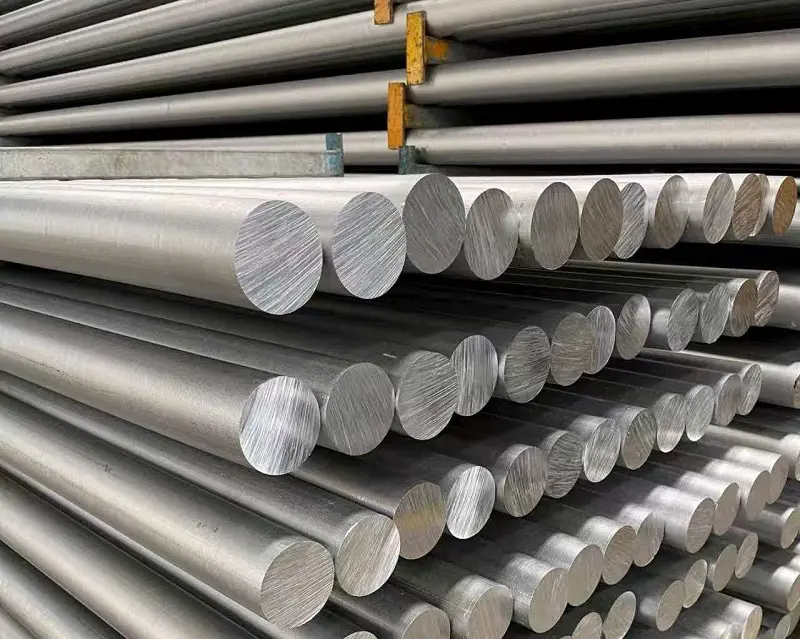
The photovoltaic industry prioritizes aluminum profiles over other metal materials because they combine performance, cost-effectiveness, and sustainability.
The following analysis outlines the seven key advantages of its application in photovoltaic systems:
Aluminum has a density of only 2.7 g/cm³, about one-third that of steel. For a 10 MW ground-mounted photovoltaic power station, an aluminum support structure can reduce the structural weight by about 40% compared to an all-steel support structure. This lightweight feature brings multiple practical benefits for PV scenarios:
In photovoltaic systems, aluminum's conductivity plays three key roles: Current collection and transmission, system grounding safety, and electromagnetic shielding. It offers the following advantages:
Although pure aluminum has lower absolute strength than steel, alloying with magnesium and silicon plus heat treatment (T5/T6) enables 6000 series aluminum alloys to reach yield strength of 200–270MPa, fully satisfying load demands of PV frames and brackets.
Aluminum extrusion is the mainstream manufacturing process for manufacture of photovoltaic frames, capable of producing various complex cross-sectional designs and offering the following advantages:
Aluminum extrusion molding offers high processing flexibility. By customizing aluminum profiles, it is possible to adapt to photovoltaic modules of various sizes and power outputs, making aluminum extrusion profiles a major structural material in the frequent iterations of photovoltaic products.
Aluminium naturally forms a protective oxide layer (Al₂O₃) that safeguards the material itself; surface treatments such as anodizing or powder coating can further enhance this protective effect, giving aluminium profiles excellent corrosion resistance and weather resistance.
Performance benefits:
Compared to carbon steel brackets, which are prone to rust, steel corrosion can contaminate the photovoltaic frame and glass, requiring annual repainting maintenance. Rusting and expansion of steel supports can cause bolts or clamps to jam, making long-term disassembly and maintenance difficult. Aluminum profiles require virtually no rust prevention maintenance, thus reducing operating and maintenance costs.
Over the 25-year design life of photovoltaic modules, the corrosion thinning of aluminum frames and supports is negligible, making aluminum a primary alternative to steel.
The aluminum profile has a smooth and uniform surface with a long-lasting and stable color.
Surface treatment processes include:
Suitable for building-integrated Photovoltaic (BIPV) applications. A variety of colors and textures are available for customization (e.g., RAL color charts, walnut wood grain), enhancing the overall visual appeal of photovoltaic projects.
Aluminum is fully recyclable with very low material loss. After photovoltaic power plants are decommissioned, scrap aluminum can be remelted and refined into recycled aluminum, which is in line with the goals of circular economy and carbon neutrality, as well as the green transformation of the non-ferrous metals industry.
Aluminum has advantages such as being lightweight, corrosion resistant, having high mechanical strength, and being recyclable.
As a core structural material for photovoltaic modules, aluminum extrusion profiles cover the entire photovoltaic industry chain, including module frames, mounting brackets, and various auxiliary components.
Driven by the global goal of carbon neutrality, and as the photovoltaic industry moves towards cost reduction, efficiency improvement, and lightweight design, aluminum, with its excellent comprehensive performance, will be used more deeply and widely.
